30-Inch Bathroom Vanity with Drawers, Ceramic Basin, and Storage: A Practical Upgrade for Everyday Organization
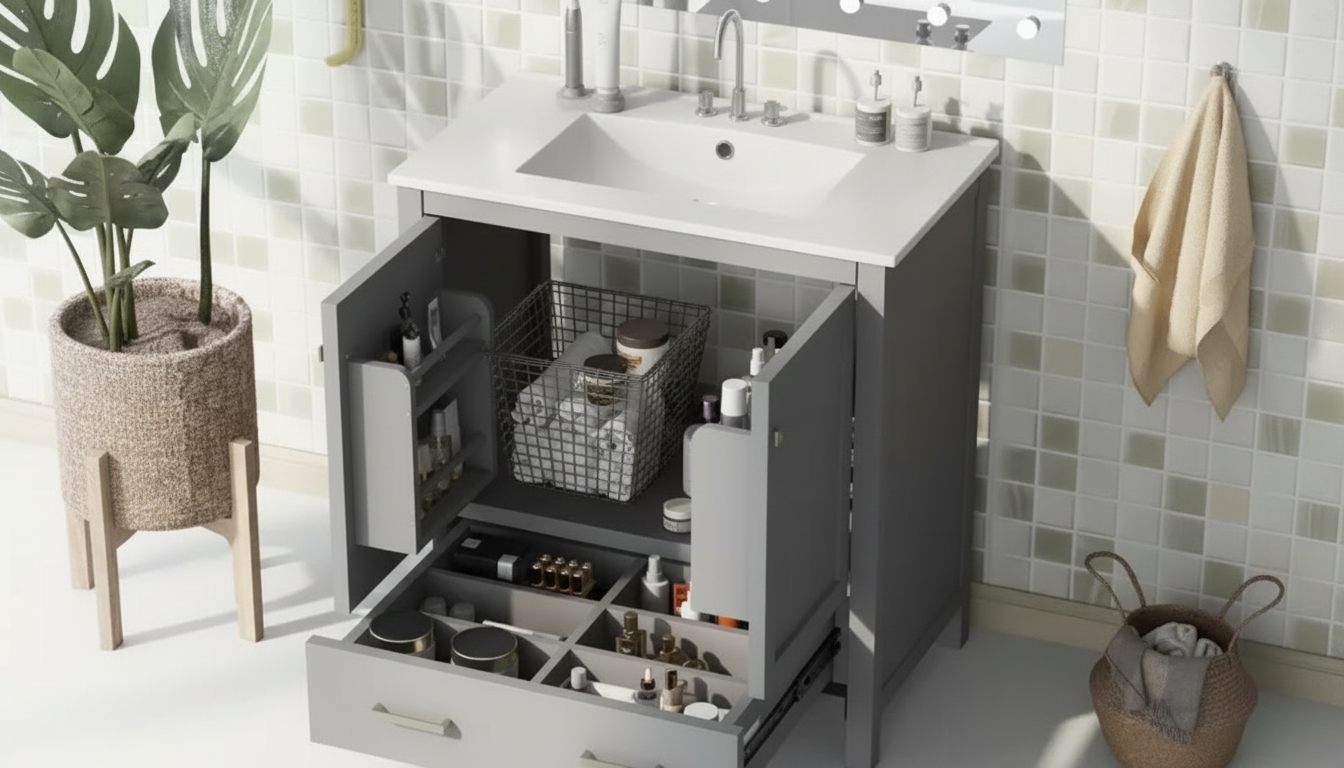
A 30-inch bathroom vanity is a dependable middle-ground: large enough to add real storage and counter function, yet compact enough to keep smaller bathrooms feeling open. When that footprint includes a ceramic basin up top and a mix of drawers plus cabinet storage below, it becomes an everyday “drop zone” for toiletries, towels, and tools—without the visual clutter of items spread across the counter.
Why a 30-inch vanity works in many bathrooms
Bathrooms have to handle morning rushes, quick hand-washes, and the inevitable pileup of products. A 30-inch vanity often lands in the sweet spot for common layouts.
- Balances footprint and function: you get meaningful storage and counter space without crowding the room.
- Plays well with typical clearances: in many bathrooms, a 30-inch width fits comfortably near a toilet, tub, or shower entry when the layout is measured correctly.
- Creates a defined “getting ready” zone: one contained area for daily routines helps keep the rest of the bathroom calmer.
- Smart pedestal-sink replacement: swapping a pedestal for a vanity is a common way to gain storage while keeping plumbing in the same general location.
What to look for in a vanity with drawers and cabinet storage
Two vanities can share the same width but feel very different in real-life use. These checkpoints help avoid surprises once it’s installed.
- Drawer configuration: full-extension drawers make it easier to see smaller items (and reduce the “forgotten stuff” at the back).
- Sink-bowl placement: confirm how the basin and plumbing route affect usable space; some under-sink areas lose more storage than expected.
- Cabinet height and access: make sure there’s room for taller bottles, hair tools, or a small waste bin.
- Hardware and smooth operation: stable pulls and quality slides matter when drawers are loaded with heavier items.
- Moisture readiness: sealed finishes and wipeable surfaces help the vanity hold up under humid conditions.
Ceramic basin benefits and everyday usability
A ceramic basin is popular for a reason: it’s built for daily exposure to water, soap, and routine cleanups. With regular care, ceramic’s smooth, non-porous surface helps resist staining from many common bathroom products.
- Easy wipe-down: a smooth finish simplifies cleaning around the faucet base and drain.
- Flexible styling: ceramic pairs naturally with a wide range of faucet shapes and finishes.
- Durable for high-traffic baths: a practical choice for guest bathrooms or shared spaces where the sink gets constant use.
For water-saving upgrades at the sink, it can help to explore faucet options that meet efficiency standards like EPA WaterSense guidance for bathrooms.
Storage planning: how to use drawers vs. cabinet space
The best-looking vanity still won’t feel organized without a simple storage plan. A good rule: drawers are for small and frequent, cabinets are for tall and bulky.
- Use drawers for daily essentials: toothpaste, skincare, razors, cotton pads, hair ties, and backup contact supplies are easier to find when they’re separated into shallow categories.
- Use the cabinet for bulkier items: extra towels, cleaning supplies, larger bottles, and refill packs store better upright behind a door.
- Add organizers: shallow trays in drawers and a small bin or turntable in the cabinet reduce “lost” items and keep categories intact.
- Keep humidity-sensitive items protected: paper products and certain cosmetics stay in better condition when kept in closed storage and away from under-sink plumbing lines.
Installation notes to confirm before ordering
A few minutes of measuring and checking compatibility can prevent the most common frustrations—like drawers hitting a nearby door casing or plumbing interfering with storage.
- Measure width, depth, and height: include door swings and drawer pull-out clearance so pathways stay comfortable.
- Locate plumbing precisely: drain and supply line positions should match the vanity’s under-sink cutouts/space.
- Check wall and floor level: a level base helps doors align and drawers glide smoothly.
- Confirm faucet compatibility: verify the faucet hole configuration and spout reach to the center of the basin.
- Plan for sealing: use silicone/caulk at wall joints and edges where water may splash to reduce moisture intrusion.
If the vanity will be tall or installed in a spot where tip-over is a concern (especially in homes with kids), review basic safety guidance like the CPSC Anchor It! tip-over prevention information.
Style pairing ideas for a cohesive look
Care and maintenance for long-lasting performance
Quick specs and purchase checklist
In-stock picks to complete the setup
FAQ
Does a 30-inch vanity fit a small bathroom?
Often, yes—30 inches is a common choice for guest baths and smaller primary bathrooms. Measure the full area, including door swings and drawer clearance, and make sure it won’t pinch the pathway near the toilet or shower entry.
How should drawers and under-sink cabinet space be organized?
Use drawers for small, frequently used items to keep the counter clear, and reserve the cabinet for tall bottles, backups, towels, or cleaning supplies. Simple trays and bins help maintain categories and keep items from shifting around plumbing.
How is a ceramic basin cleaned without damaging the finish?
Clean with mild soap and a soft cloth, and use only non-abrasive bathroom cleaners for deeper cleaning. Avoid harsh scrub pads, and wipe away water spots regularly to reduce mineral buildup.
Recommended for you







Leave a comment