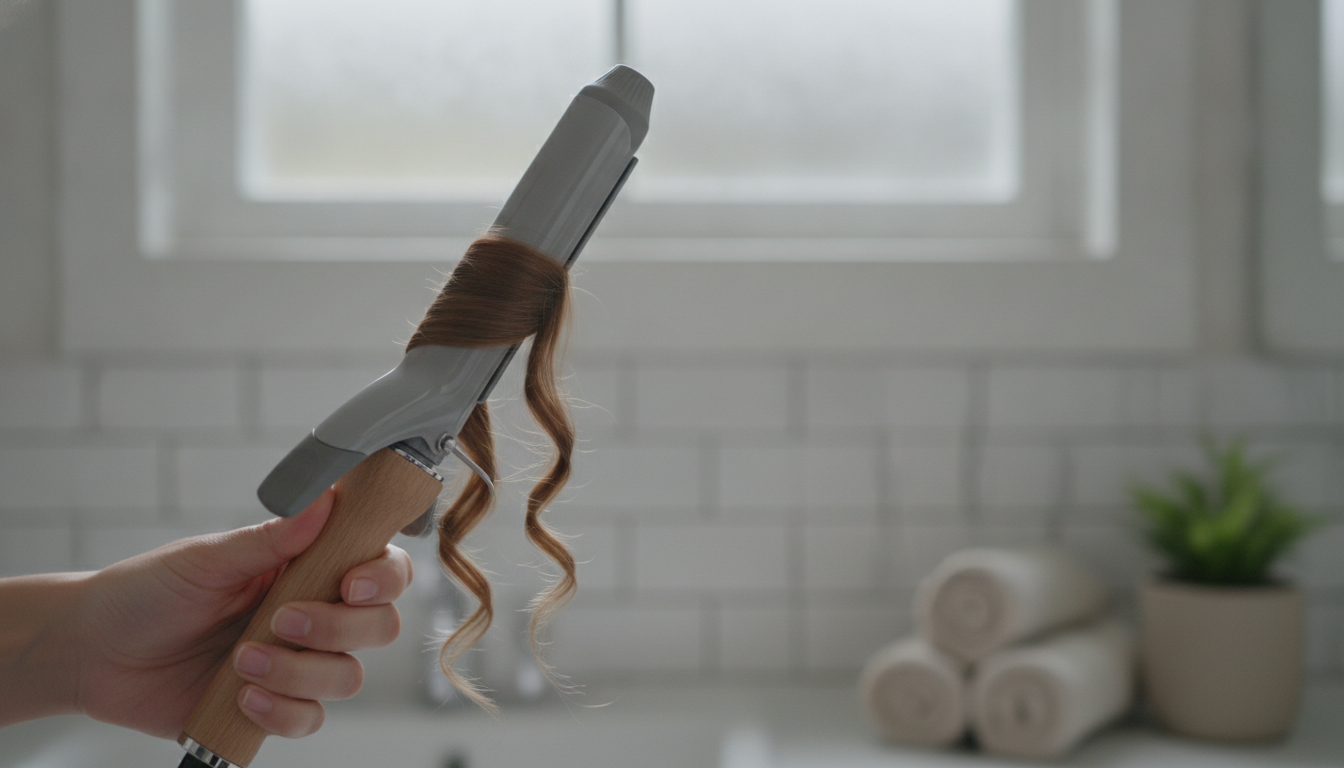
A ceramic hair curler is often better for everyday curling because it heats evenly and helps smooth the hair cuticle as you style. That combination typically means fewer hot spots, more consistent curls, and less frizz—especially on fine, color-treated, or easily dry hair.
Ceramic barrels are designed to distribute heat across the entire surface rather than concentrating it in one area. With more even heat, you can usually use a slightly lower temperature while still getting long-lasting results, which can translate to less heat stress over time.
Ceramic is a strong pick if hair tends to look frizzy after heat styling, if curls don’t come out uniform, or if the goal is soft, touchable waves rather than super-tight ringlets. It’s also a smart option for beginners because even heating makes styling more forgiving and reduces the chance of accidental scorching in one spot.
For very thick, coarse, or stubborn hair, titanium can feel “faster” because it typically reaches high temperatures quickly and transfers heat aggressively. Tourmaline (often paired with ceramic) can be helpful if frizz control is the top priority. The best choice depends on hair type, heat tolerance, and how much hold you want.
Use the lowest effective temperature, curl fully dry hair, and work in sections that match the barrel size. If hair is fine or damaged, staying in the 250–320°F range is commonly enough; thicker hair may need more heat, but increasing temperature should be the last lever to pull after adjusting section size and timing.
For a deeper breakdown of ceramic vs. other materials and how to choose for your hair type, read the full guide here: https://chicvow.com/is-a-ceramic-hair-curler-better/.
Fine or fragile hair usually does best on lower heat, while thick or coarse hair may need a higher setting. Start low, increase gradually only if curls won’t hold, and avoid max heat unless it’s truly necessary.



Leave a comment