
A cuff bracelet should be big enough to slide comfortably over the narrowest part of your wrist, then sit securely without pinching or spinning. Most cuffs are designed with a small opening (the “gap”) and a slightly oval shape so they hug the wrist bone instead of drifting up and down your arm.
Use a soft measuring tape (or a strip of paper) to measure around your wrist where you’ll wear the cuff—typically just above the wrist bone. For many adults, wrist sizes fall around 6 to 7 inches, but the “right” cuff size is about how it feels: snug enough to stay put, loose enough to move a little.
Cuff bracelets aren’t measured like closed bangles. A common rule is that the cuff’s inside circumference plus its gap should be close to your wrist measurement. For example, a cuff with a 5.5-inch inside circumference and a 1-inch gap fits roughly like a 6.5-inch wrist. If you’re between sizes, choose the size that matches your wrist for a secure fit—especially for lighter cuffs that can rotate more easily.
Many cuffs have a gap around 1 to 1.25 inches. A smaller gap can feel more secure but may be harder to put on; a larger gap is easier to slip on but may catch on clothing or turn on the wrist. The ideal gap lets you put it on without forcing it over your wrist bone.
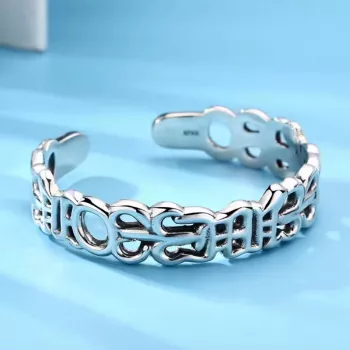
Gently tweaking the opening once for comfort is fine, but repeated bending can weaken metals over time. If you’re shopping for a sterling silver cuff style, sizing it correctly from the start helps it keep its shape. For more details on fit, care, and styling of letter cuffs, visit this sterling silver hollow letter cuff bracelet guide.
Wrap a flexible tape around your wrist where you’ll wear the bracelet and note the measurement. If using paper or string, mark the overlap and measure it against a ruler.




Leave a comment